Severe burns are one of the most complex conditions to address in clinical and rehabilitation settings. Beyond the initial tissue damage, the recovery process can be long and challenging, characterised by pain, itching, scarring, and functional limitations that significantly impact patients' quality of life.
In recent years, photobiomodulation has attracted growing interest as a potential adjunct to conventional treatments due to its ability to modulate certain biological processes involved in tissue repair. This is the context of a recent study published in the journal Life, which evaluated the use of MLS® Laser Therapy in patients with severe burns, providing new evidence on the potential contribution of this technology to the healing and rehabilitation process.
Why managing severe burns requires a multidisciplinary approach
According to the World Health Organisation, every year over 11 million people worldwide require medical treatment for burns, while approximately 180,000 deaths are related to these injuries.
When burns affect large areas or deep tissue, the clinical challenge is not simply achieving wound closure.
Recovery involves multiple aspects:
- controlling inflammation;
- managing pain;
- reducing itching;
- preventing scarring complications;
- recovering mobility;
- returning to daily activities.
For this reason, treating severe burns requires the involvement of multiple professionals and an integrated approach that includes local care, pharmacological management, surgery when necessary, and early rehabilitation.
Photobiomodulation and wound healing: the biological rationale
Photobiomodulation uses specific wavelengths of light to stimulate biological processes involved in tissue repair.
Available evidence suggests that light absorption at cellular level can promote ATP production, modulate the inflammatory response, and support tissue regeneration processes.
The most studied biological effects include the following:
- improved microcirculation;
- modulation of pro-inflammatory cytokines;
- stimulation of fibroblast activity;
- support for re-epithelialisation;
- reduction of painful symptoms.
The distinctive features of MLS® Laser Therapy
MLS® technology synchronises two laser emissions:
- 808 nm continuous emission;
- 905 nm pulsed emission.
According to the study authors, this combination allows associating anti-inflammatory, anti-oedema, and analgesic effects within a single therapeutic application.
The clinical study: 65 patients with severe burns
The study was conducted at the “Bagdasar-Arseni” Teaching Emergency Hospital in Bucharest and involved 65 adult patients with grade IIA-IIB and III burns.
Participants were divided into two groups:
- 35 patients treated with standard care combined with MLS® Laser Therapy;
- 30 patients treated with standard care alone.
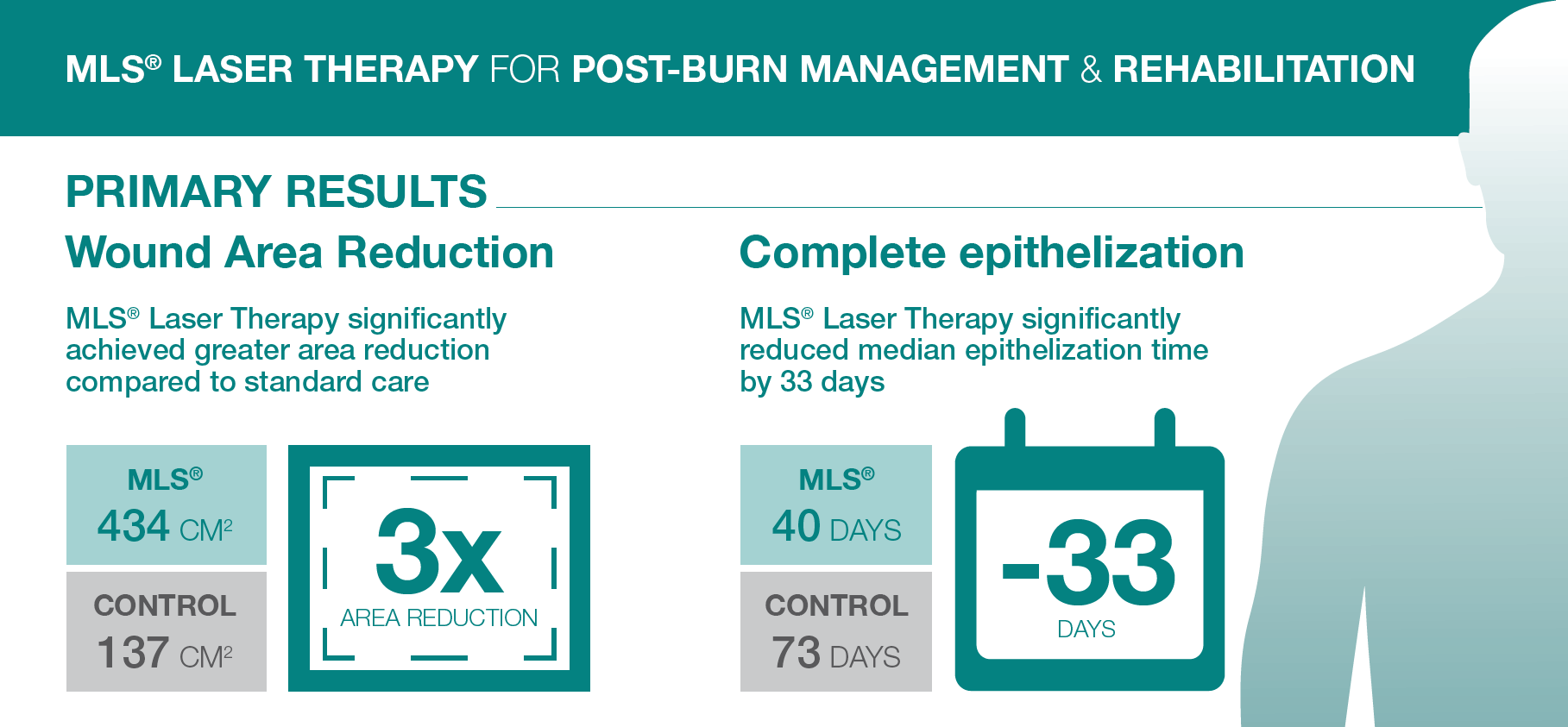
The primary objective was to evaluate the time required to achieve complete wound re-epithelialisation.
Secondary endpoints also analysed wound surface reduction, pain, itching, scar quality, functional independence, and quality of life.
The treatment protocol
In the group treated with MLS® Laser Therapy, the protocol included:
- 10 total sessions;
- one session every two days;
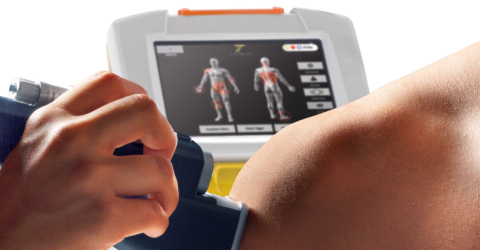
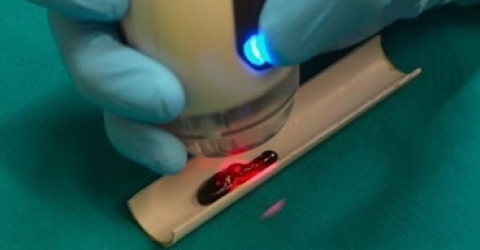
- non-contact robotic application;
- treatment of the entire wound surface;
- dose of 4 J/cm².
The use of a robotic scanner allowed uniform energy distribution even over large and irregular areas, a particularly valuable feature in burn management.